AI:AM GUEST

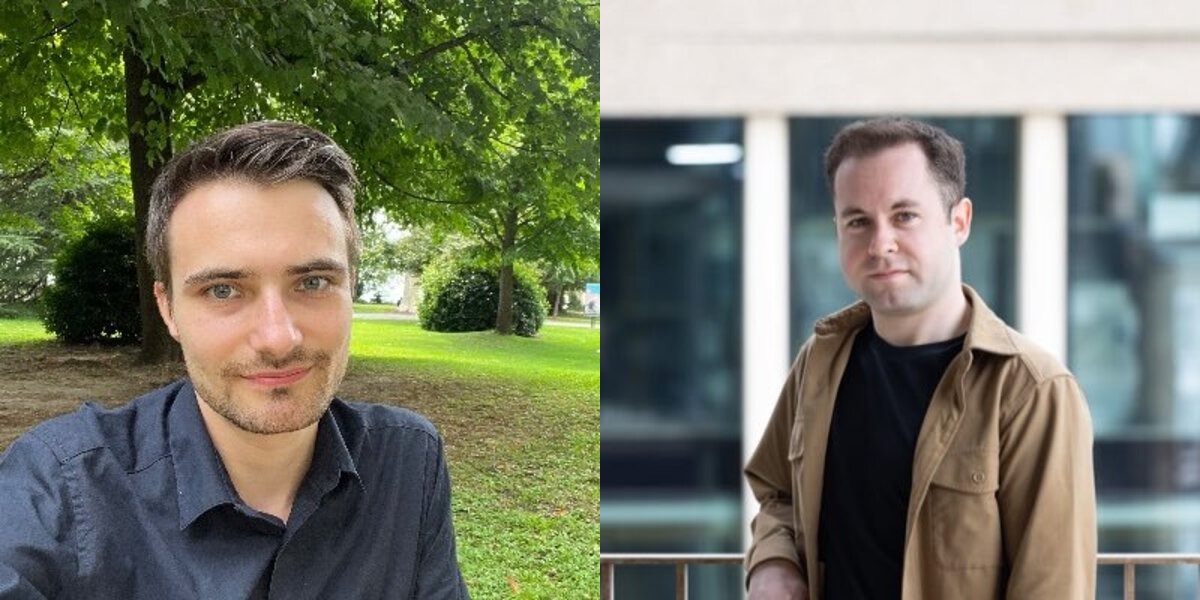
Louis Kirsch and Damon Falck

Co-Founder and Chief Superintelligence Officer (Louis), Member of Technical Staff (Damon), Inherent Laboratories

Louis Kirsch and Damon Falck work on Faraday at Inherent Laboratories, the London public benefit corporation founded by DeepMind alumni that came out of stealth in May 2026 with a $50M seed round co-led by Index Ventures and Radical Ventures. Kirsch is a co-founder and the lab's Chief Superintelligence Officer; he did his PhD under Jürgen Schmidhuber at IDSIA on automating AI research and was a research scientist at Google DeepMind. Falck is a member of technical staff and the first author on Faraday; he came from MATS and Oxford by way of quantitative trading, and his prior paper studied whether language models can learn to resist their own RL training. Faraday is a 27-billion-parameter research agent that calls much larger coding models as tools, and which the lab reports outperforms Claude Opus 4.8 and GPT-5.5 at replicating published research figures.
APPEARANCES

One AI:AM appearance.

EPISODE 2026-08-26 · AUG 26, 2026

AI:AM LIVE — August 26, 2026 — The 100-Gigawatt Problem, Vercel's Malte Ubl on Self-Driving Infrastructure, and Inherent's Louis Kirsch and Damon Falck on Training an AI Scientist

Nathan Labenz and Prakash Narayanan open on the physical limits under the AI buildout — power, chips, copper and construction — starting from the disclosure that the anonymous "Ox Alpha" model on OpenRouter was Zhipu AI's GLM-5.3 running largely on Chinese silicon, and working through YMTC's push at the top of the NAND market, stranded gas, off-Earth compute, and Andrew Critch's prediction that materials science is where AI surprises people next. Vercel CTO Malte Ubl describes self-driving production infrastructure — an agent that looks at an alert for thirty seconds before it wakes anyone — along with the Eve framework, the economics of a zero-margin AI Gateway, and a security picture in which open models are already strong at offense; he argues the technology for a red-team exercise and a black-hat attack is the same, so withholding it from defenders is the wrong call. Louis Kirsch and Damon Falck of Inherent Laboratories, where Nathan disclosed on air that he is an investor, explain Faraday, a 27-billion-parameter research agent that directs a much larger coding model, why they judge whole research trajectories rather than final outputs when "science is inherently non-verifiable," and how they would recognize escape velocity in a system improving its own learning. The close runs from lab culture and an AI capital super cycle to animal welfare, Anthropic's privacy-preserving research access, and how you would even punish an AI.

GUESTS · Malte Ubl, Louis Kirsch and Damon Falck