AI:AM GUEST

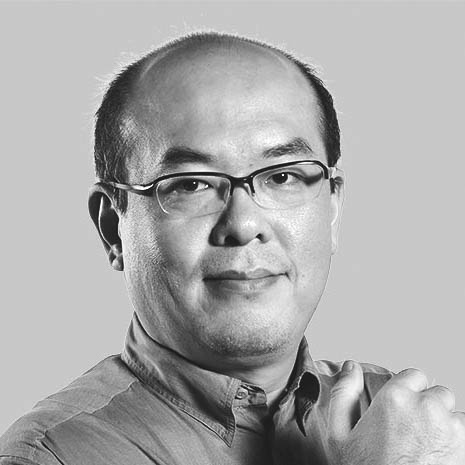
David Li

Founder, Shenzhen Open Innovation Lab

David Li founded the Shenzhen Open Innovation Lab and co-founded XinCheJian, China's first hackerspace, in Shanghai in 2010. For fifteen years he has argued that shanzhai, the copycat electronics culture the West sneers at, and open-source hardware are twins separated at birth, and that Shenzhen's advantage is iteration speed rather than intellectual property. He reads China's AI conversation as overwhelmingly practical: which product to bolt a model onto next, rather than a race toward a finish line.
APPEARANCES

One AI:AM appearance.

EPISODE 2026-08-24 · AUG 24, 2026

AI:AM LIVE — August 24, 2026 — Arm's Mohamed Awad on Why Agents Don't Sleep and What That Does to the CPU, and Shenzhen Open Innovation Lab's David Li on Why China's AI Conversation Is Boring on Purpose

Two views of the layer under the model — one from inside the architecture that just stopped being neutral, one from a system that never had IP protection to lose. Mohamed Awad, EVP of Cloud AI at Arm, explained why a company that spent thirty-five years licensing designs now sells its own silicon, how the Meta partnership traces back to AWS's 2019 Graviton launch, and what actually changes in a CPU built for agents rather than people: agents don't sleep, so the CPU stops being the thing you wait on and becomes the coordination layer feeding accelerators that never idle. Asked where the GPU-to-CPU ratio settles, he declined to guess. David Li, founder of Shenzhen Open Innovation Lab and co-founder of China's first hackerspace, described a manufacturing culture with no next-week mentality, industrial robot hardware down near $3,000 with the bottleneck moved to the engineers who can install it, and an AI discourse he characterised as overwhelmingly practical — nobody in China, he said, notices a domestic model launch unless it crashes the Nasdaq. The hosts opened on Anthropic's Fable 5 holding flat at roughly 10–15% of business AI spend and what that says about whether new frontier models drive incremental demand, and closed disagreeing about whether Chinese labs feel any urgency from the summer's rogue-agent incidents.

GUESTS · Mohamed Awad, David Li