As aired
Prakash introduced Michael Förtsch, founder and CEO of Q.ANT, the Stuttgart-based photonic computing company he started in 2018 after earning his doctorate — and the Otto Hahn Medal — at the Max Planck Institute for the Science of Light. Förtsch's pitch is that while the industry pours hundreds of billions into standard silicon and pins its long-term hopes on a distant, fault-tolerant quantum future, the immediate answer to the data center energy crisis is analog photonic computing — chips that compute with light instead of electricity. He was quick to correct two things right out of the gate: call him Michael, not "Doctor," and call the company Q.ANT, an acronym for quality, anticipation, novelty, and team.
His core technical claim: a standard CMOS chip, for all its sophistication, "never made it past second grade" — it can only add and multiply, so every operation a computer performs has to be decomposed into plus and multiplication. Q.ANT's photonic processors, by contrast, can natively execute complicated functions — sine, cosine, exponential, Fourier transforms, convolutions, oscillations — without decomposing them first. That matters because, at a modern process node, roughly 95% of a chip's energy is spent moving data to and from memory rather than on the arithmetic itself. Rather than fight for gains in that remaining 5%, as most of the industry does, Q.ANT replaces the compute core itself, cutting how much data has to move at all.
The tradeoff, Förtsch explained candidly, is that photonics has no optical memory and photons never sit still — they're always moving. So a system has to either compute while light is propagating, or pay an energy tax converting it back into digital memory via ADC/DAC converters. Q.ANT's answer is what he calls a "streaming architecture": chain as many optical operations together as possible before converting back to digital, rather than trying to graft a Von Neumann, memory-centric design onto optics. He argued the absence of optical memory, which looks like a limitation coming from CMOS, was actually what freed Q.ANT to think about computing on light's own terms.
Asked by Nathan to explain the physics at the most basic level, Förtsch reached for two images: two stones thrown into water, whose interfering ripples are already a complex computation dependent on amplitude and distance; and eyeglasses, which perform a continuous, energy-free Fourier transform of an image onto the retina. Light passing through a diffractive medium does the same operation for free, and a tuned optical cavity can behave as a damped oscillator — a building block increasingly useful for state-space AI models. Q.ANT, he said, controls the full stack: its own wafer material and pilot line, PCIe-card processor integration, and the algorithm work that maps applications onto functions light can execute natively.
The most concrete proof point discussed was a PyTorch object-detection model that Q.ANT and the startup Daisytuner compiled directly onto Q.ANT's photonic machine code in under three weeks — no CUDA-style intermediate layer needed. In a head-to-head demo at the T-Systems challenge, the compiled model matched GPU-class picture-identification accuracy on live video captured outside the T-Systems building, running at roughly 40 frames per second on Q.ANT's second-generation hardware, correctly identifying cars and trains.
On benchmarks and roadmap, Förtsch rejected TFLOPS and TOPS as meaningful comparisons — Q.ANT isn't digital — in favor of inferences-per-second-per-watt, measured per application. On image classification specifically, he said Q.ANT sees a realistic path by early 2028 to beating CMOS by roughly 2x on throughput and 10x on energy. Longer term, he pointed to Fourier-transform-based attention-layer compression (citing Google research on KV-cache reduction) as a way into transformer workloads, and described a dream hardware path of moving past single PCIe cards toward a mainboard with 32 to 48 optically interconnected photonic chips streaming computation server to server.
Pressed by Prakash and Nathan on supply chain and manufacturing, Förtsch described Q.ANT's chips as essentially standard silicon wafers with a thin lithium-niobate layer on top, built on a refurbished 1990s-era 90-nanometer CMOS line using off-the-shelf fab tools — no exotic equipment, just different, Q.ANT-owned processing recipes. He argued this decouples AI compute from bleeding-edge lithography: any fab willing to retool, in Europe or elsewhere, could become a photonic supplier without the capital or geopolitical exposure of a leading-edge node. Asked what could still derail the technology at scale, he pointed not to physics or manufacturing risk but to incumbent inertia — the innovator's dilemma — while betting photonic coprocessors become a standard AI-data-center add-on within three to four years.
On quantum computing, where Förtsch spent roughly a decade before moving to photonics, he offered an extended car analogy: the CPU is the station wagon, the GPU is a drag racer built for one thing done extremely well, photonics is his aspirational Formula 1 car with more general-purpose horsepower, and quantum is a boat — indispensable for crossing a lake but useless on the road alone, and properly called a "quantum processor," not a full computer. Asked where the money is to be made, he pointed listeners toward buying and converting legacy semiconductor fabs rather than betting on the chip technology directly, and named low-power ADC/DAC converters as the real unsolved engineering bottleneck for the whole photonics field. He closed by noting Q.ANT has adopted AI internally for email triage, meeting notes, and database organization over the past six months, but not yet for chip design R&D — though he's intrigued by eventually simulating a photonic chip (a harmonic oscillator) on a photonic processor itself. Nathan and Prakash closed the segment reflecting on how genuinely hard it is to build durable intuition and investment conviction around a hardware paradigm this novel, and on the geopolitical stakes if legacy, non-leading-edge fabs really can become a meaningful new source of AI compute outside the current lithography chokepoints.
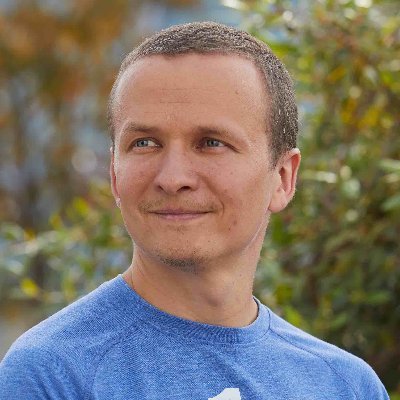 Sergey Edunov
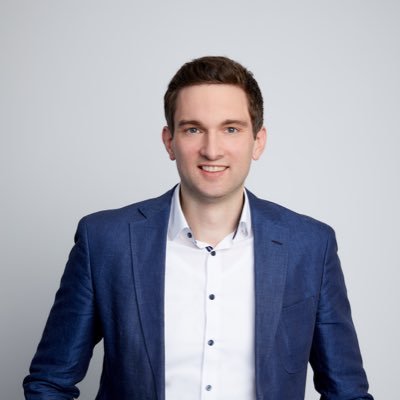 Michael Förtsch